
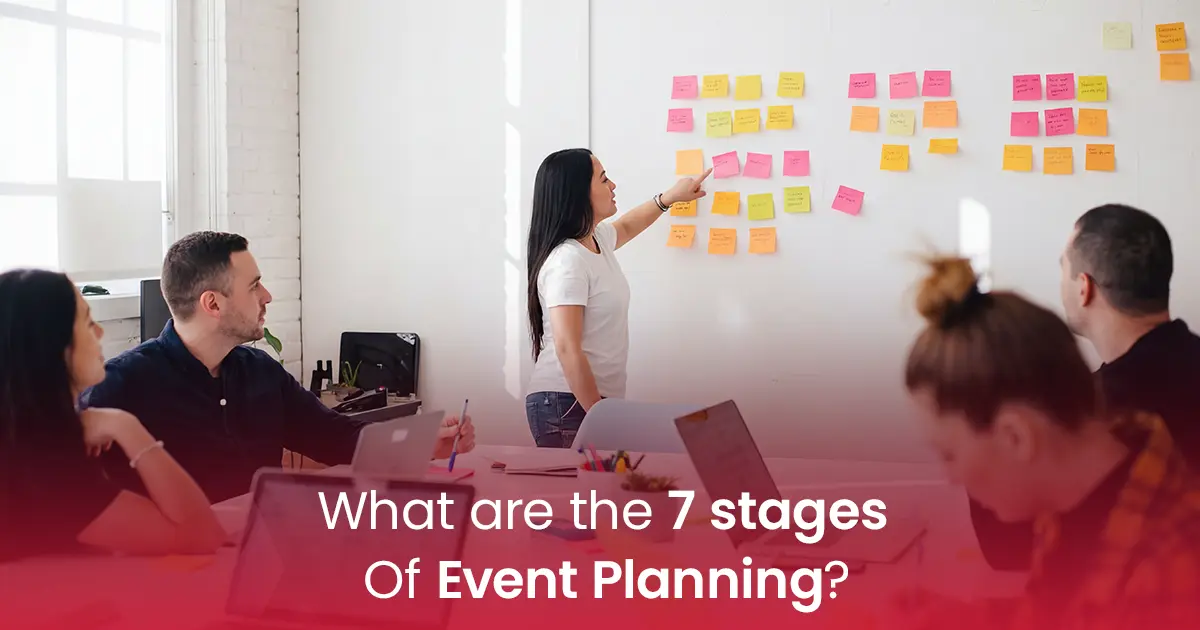
Planning an event in 2026 is not what it used to be. Booking a venue and sending out invites will get you a room full of people. What it will not get you is an event anyone remembers or a client who calls you back.
Expectations have shifted in ways that catch a lot of teams off guard. Attendees want to feel like the event was built for them specifically. Stakeholders want to see where the money went and what it produced. And everyone expects things to run without visible hiccups, even when a hundred things are going sideways behind the scenes.
That kind of pressure requires a real process. At Media Sniffers, we work through a 7-stage framework that keeps creative ambition and operational discipline moving together, so nothing gets sacrificed for the other.
1. Strategic Goal Setting and Event Purpose
In 2026, events are no longer standalone experiences. They are part of a larger business and marketing strategy.
Before anything else, define:
- What success looks like
- Who the event is for
- What measurable outcomes you want
Here is where most events quietly go wrong. The goal gets set as something vague like “create brand awareness” or “bring people together,” and then three months later nobody agrees on whether the event worked or not. Without a defined target from day one, you are essentially planning in circles.
A professional event planning agency ensures your event starts with clarity, not assumptions.
2. Smart Budgeting and Resource Allocation
Budgeting in 2026 is more complex than ever. Costs are rising, and stakeholders expect clear financial justification.
A strong budget includes:
- Core production costs
- Marketing and promotion
- Technology and tools
- Contingency planning
Most budget problems do not come from overspending on one big thing. They come from ten small things nobody accounted for early enough. Experienced planners build forecasts that leave room for reality, not just the ideal version of how things go.
Working with Media Sniffers means smarter allocation, where every rupee is tied to value and outcomes.
3. Experience Design and Concept Development
Events in 2026 are built around experiences, not just logistics.
Attendees expect:
- Personalized journeys
- Interactive engagement
- Meaningful connections
Ask anyone what they remember about the last event they attended. They will not mention the schedule. They will tell you about a moment, a conversation, or something that surprised them. That is what experience design is actually chasing. The logistics exist to protect the experience, not the other way around.
This stage includes:
- Theme and storytelling
- Audience journey mapping
- Visual identity and branding
At Media Sniffers, we design events that are not only visually strong but strategically aligned with audience expectations.
4. Venue Strategy and Vendor Ecosystem
Venue selection is no longer just about space. It is about flexibility, technology, and experience.
In 2026, venues are expected to:
- Support hybrid and digital integration
- Adapt to different event formats
- Enhance attendee experience
A venue that photographs beautifully but cannot handle your AV requirements is a problem waiting to surface on the day. Beyond the venue itself, the vendor side has grown into something much harder to manage. Production, tech, catering, and logistics each come with their own timelines, contacts, and demands.
With multiple stakeholders involved, a professional event planner ensures everything runs in sync without communication gaps.
5. Marketing, Audience Targeting, and Pre-Event Engagement
Promotion is no longer optional. It is a core stage of event planning.
Modern strategies include:
- Social media campaigns
- Influencer collaborations
- Email funnels
- Performance marketing
The landscape has also shifted. Reach alone does not move people anymore. Someone seeing your event promoted fifteen times is not the same as someone feeling like your event was made for them. That second person actually registers. The first one scrolls past.
A results-driven event planning agency like Media Sniffers ensures your event reaches the right audience and builds anticipation before it even begins.
6. Execution, Technology Integration, and Real-Time Management
Execution is where everything is tested.
In 2026, event execution includes:
- Real-time coordination
- AI-powered tools and automation
- Live engagement tracking
- On-ground problem-solving
Every event hits at least one moment where something does not go as planned. The difference between a professional team and an amateur one is not that the professionals avoid those moments. It is that nobody in the audience ever knows they happened.
An experienced event planner ensures:
- Timelines are followed
- Vendors are aligned
- Guests have a seamless experience
With Media Sniffers, execution is controlled, calm, and precise even in high-pressure situations.
7. Post-Event Analysis, ROI Tracking, and Long-Term Impact
The event does not end when guests leave.
In 2026, events are measured by:
- Data insights and analytics
- Audience feedback
- ROI and performance metrics
- Long-term engagement
A lot of teams treat the post-event phase as a formality. That is a mistake. The data from one event shapes how the next one is planned, budgeted, and sold to stakeholders. Skipping proper analysis means starting from scratch every single time.
A professional event management agency provides detailed reports that help you improve future events and maximize impact.
Why Hiring a Professional Event Planning Agency Matters in 2026
Event planning today requires strategy, technology, creativity, and execution all working together.
Without expert support, businesses often face:
- Budget overruns
- Poor coordination
- Low engagement
- Unclear ROI
A professional event planner brings:
- Structured planning frameworks
- Industry expertise
- Access to trusted vendors
- Data-driven decision-making
- Stress-free execution
Media Sniffers combines all these elements to deliver events that are not just successful but truly impactful.
Conclusion
The 7 stages of event planning are no longer just a checklist. In 2026, they represent a strategic system that connects planning, execution, and measurable outcomes.
From defining goals to analyzing performance, every stage plays a critical role in delivering a seamless and results-driven event.
If you want your event to stand out, perform, and create lasting value, working with a professional event planning agency is not a luxury. It is a necessity.
Media Sniffers is here to turn your vision into an experience that delivers real results.
Explore More: